
Broadcasting 101: Writing, Hosting, and On-Camera Excellence

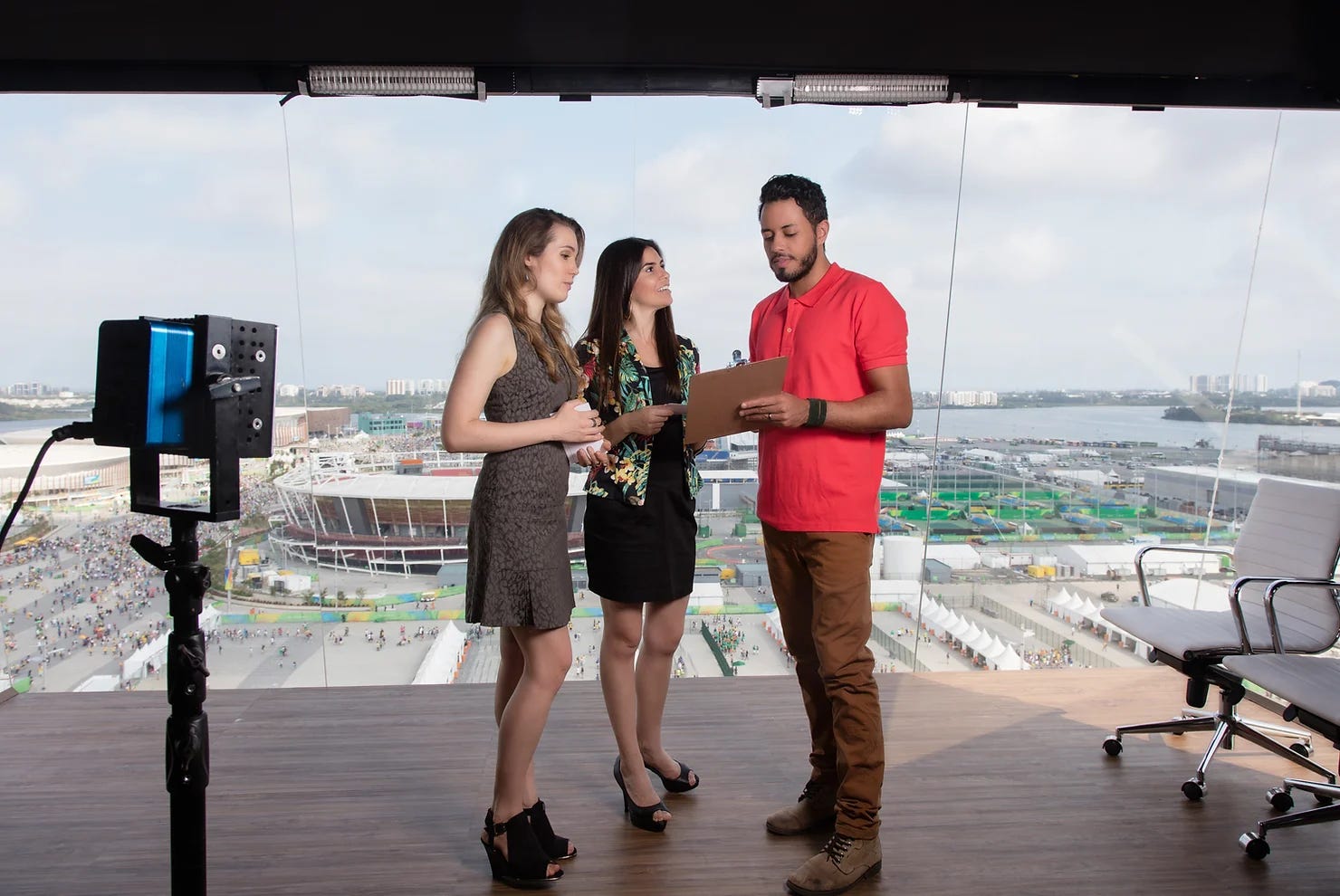
During the pandemic, I had the opportunity to take a gander at a few Sports Businesses and Broadcast Zoom Meetings, presented by Dave Leno. If you don't know about Dave Leno, he is a host and play-by-play announcer of the Philadelphia Union, play-by-play of (defunct) New York Riptide of the National Lacrosse League, Play-By-Play announcer of various sports on ESPN, and many more.
One of the subjects is the TV Hosting, On Camera Work, and Broadcast Writing. For this subject, we'll take a look at what's on the agenda including Opens, standup and hosting, chemistry on set, broadcast writing, and many more.
More details on the videoare at the end of the blog whenever you have time.
What's it like being on camera?
When the producer is counting down 3, 2, 1, what thoughts are popping through your mind? Do you memorize material or just recite what you know? How do you present yourself in the best way possible to the audience?
Here are tips for being on camera:
Collecting yourself in the moment for LIVE TV
Rehearsing your material
Getting rid of the nerves, handling pressure
Routine: Make-up, check clothes, notes, etc.
Dress, presence and posture
Sitting or standing straight vs slouched over
Watch your hand movement
Are you waving your hands too much?
Do you have a notepad in your other hand?
Handling people watching you work
SHOW SOME PERSONALITY! BE YOURSELF!
Looking in the camera and engaging the viewer
Smiling and SLOW DOWN!
Speaking smoothly during your O/C
Tossing to a PKG (Package) or SOT (Sound on Tape)
OPEN SEGMENTS FOR PLAY-BY-PLAY OR STUDIO HOSTING
Coming on the air strong!
Projecting your voice - use as an instrument
Don't miss a beat with your opening!
Making a good first impression when your audience sees you for the first time
Knowing the difference between solo shots (like a 1-shot) vs. a wide shot (2-shot) with your co-anchor or analyst
Understand how your show is being shot?
Ask your director how he or she "cuts" the show
Having a strong yet conversational tone on your opens (what's the most important info about this game or report?)
Reading from a teleprompter vs. just straight up looking into the camera
Looking down at a script or a phone for a report on location or in the studio
Reacting to what the viewer is seeing on a live look or during breaking news
PLAY-BY-PLAY OPENS IN MORE DETAIL
Rehearse, Rehearse, Rehearse!
If you don't have time, make sure everyone is on the same page; not just your analyst. Communication is key!
Going over the simple things like the open animation, title card, sponsored elements (what sales obligations does the network or team have?)
SIMPLIFYING YOUR OPEN: You don't need to get out every storyline at the top. You have the whole game to present the most essential info for the viewer coupled with your PxP
Getting to your analyst early: Asking him or her what he or she wants to talk about and confirming with your producer.
Tagging what your analyst says vs. moving on to the next topic
How to hit the bumper to break: Lead your producer to a shot to break
IN THE STUDIO, AT THE DESK
Sitting up straight, good posture is a premium
Elbows up to the desk
Remember, TV is a visual medium -- dress the part!
Cadence of your voice and controlling the pacing from one story to the next -- try not to rush even under a time crunch
Knowing where all your monitors are... Whether they're part of the desk, or at the base of the camera?
How many monitors will there be in studio?
Making sure you can hear yourself and the control room as clearly as possible
Ask for help with your mic boxes and wiring
Organize your scripts and notes in a way you can see all your info clearly, whether handwritten or typed
Understand when's the right time to engage the camera, look at your analyst or co-anchor or when to look down at your notes when there's video.
AD-LIBBING: The ability to think on your feet, reacting to what viewers are seeing at home or tagging a comment.
WHAT MAKES A GREAT STAND UP?
Delivery, Knowledge and Confidence.
Don't be caught off guard; know when your producer/director is going to come to you or know when you're going to start your O/C (original content).
If taping a standup, do a 3-2-1 countdown for editing purposes.
Having the same energy for a pre-taped standup vs going LIVE (do multiple takes even if you nail the first one)
When's the right time to do interactive standups?
In the field, a feature story or have a prop?
Grabbing an interview LIVE
Pre-planning to have a guest or group standby
Preparing for all types of remarks
Mic flag positioning
Make sure your viewers can see your company logo for branding purposes!
Body language and dressing the part
Dressing for the atmosphere you're in
Memorizing your report vs rolling with what you know off-hand.
Smooth toss back to the studio or throw to your PKG or SOT
Working on your craft as a student reporter in college
For those of you in college:
Use all of the resources at your school -- renting equipment -- camera, mics, lighting, batteries, editing tools, etc.
At an event, work on as many version of your standup as you can and in different locations.
Don't rush your work if you don't have to! You're not on deadline!
Edit your own work. Ask a fellow student for help in post production. Learn the editing software.
When at a game, film each other doing a standup and critique work on the fly.
Perform a LIVE report amid a crowd. During a game, go down near court or in your media section and do a mock standup.
Attend practices, the games and postgame press conferences. Write down notes to use in your stories! Be seen!
Utilize all the athletics facilities to your advantage
Media Relations staff is there to help you! Make yourself be known. Show the staff how hard you work! You'll gain trust.
Connect with other sports media, both in and out of college!
You never know when he or she may be able to help you in the future?
CHEMISTRY ON SET OR IN THE BOOTH WITH YOUR PARTNER
Understanding your roles on the broadcast (PxP, Analyst, Sideline Reporter)
Who's going to navigate from one topic to the next?
Different for a studio setup vs. PxP and analyst
Eye-contact and body language when your partner is speaking
Understand how the show will be shot when your partner takes over
Rehearsing your rundown with your analyst or co-anchor
Sharing information with your partner to bolster the show. Go over the format in detail.
Communicate, have a meeting prior to the show
Pre-production is important even if brief.
Smiling at each other
You can't fake chemistry on-air, so you really have to admire your partner's work and help if needed.
Recognition of your partner's work
Tagging or following up on what was said.
Reacting naturally to a segment or SOT
WRITING FOR BROADCAST TV
How should I lay out a script for broadcast TV?
Know your broadcast terms - VO, SOT, O/C, tease, tag
Writing in active voice
What do viewers want to hear first? What is the most important part of the story? How do I structure a good lead-in?
The use of short sentences -- simplify your writing!
Writing how you talk -- make it easy for your listeners to comprehend.
Knowing when's the right time to pause or take a breath in between sentences and stories.
Trimming down a press release or an interview for air
Give the viewers the most essential info
Don't try to sound smart with big words
Organizing your story (open, lead-in, middle and close)
Talking over graphics or pictures (a summation or caption of what is seen)
You do not need to say every single word that is on the screen
THE ART OF STORYTELLING FROM "MAKE IT MEMORABLE" BY BOB DOTSON
Write the middle of your story first.
"Make your points as clear and sharp as you can, so they'll cut through the clutter and stick in the viewers memory"
Don't dwell on a good open and close
The facts will fill up most of your story
The open should come to you as you write. A lasting image could give you a good close.
Use of sound bites: Gather your best SOT, paraphrase the other clips, you don't need redundant sound. Use the info your subject tells you to help write the story.
Rack up your best sound and fill in details around it!
"Write to the Corners of your picture," says Dotson -- tell the viewers something they might have missed even standing next to you. Be Descriptive, Use all your senses.
"The best storytelling is filled with details."
"Your ear is often the best copy editor you'll find."
Dotson continues, "Metaphors can help instill grace in your writing and provide a bit of dramatic tension."
"Race day dawned still and clear, as if the sky had intended to hold its breath."
INTERVIEWING TECHNIQUES
Preparing for your interview -- don't just walk in and say, "who are we interviewing today?"
Have a game-plan, questions ready to go and execute!
Go over the interview with your producer beforehand.
Understand when it's appropriate to preview the interview topic with your guest
(ex. team employee pre-taping segment for pregame)
Always good to make conversation before the interview. Let the guest open up and relax. Don't lead with the "hard-hitting" questions.
Remember, short, polished questions are always great in post
Make the interview about the guest and the event, not about you!
BE A GOOD LISTENER! Use follow-up questions.
Bob Dotson of NBC News said, "uncomfortable silences helps you get a more memorable, shorter sound bite." So stop talking and listen.
You don't need to come off sounding smart. Keep your ideas and thoughts inside. Let it show in the final product.
Good body language when listening to your interviewee.
Focus on the subject, not the camera. The editors will know the time and place to cut to you.
Be cognizant of time and the length of your interview. A producer can help in this area.
Know the difference of a LIVE interview vs. a taped piece.
HOW TO MARK IMPROVEMENT
Make copies of your work
Have a gameplan before the broadcast how you're going to record the game.
Review your most recent material as quickly you can
If you watch snippets of your game later that night you may remember what you were thinking in moments that come to question.
By watching yourself again -- see what everyone else is noticing.
Take the time to listen to other opinions on your work, whether you agree or not.
Don't mock someone else's call. Be yourself. But watch others to inspire you to get better.
Write down reminders for your next broadcast
Idea --> Bring a 3x5 card to your next show w/reminders and have it handy on set next to your notes.
Review before you're about to go on air. It helps!
What's 1 or 2 things I can do differently on the next broadcast?
Practice in studio, on location or at home
Asking peers, friends and parents for advice, critiques, what they liked and what they want to see improve.
Seek both positive and constructive feedback from people you trust.
EMCEEING AT AN EVENT
Stage presence like you're a performer
Own the stage! Be confident in your work, but don't make the event about you.
Have meetings before your event whether in-person or by phone (not just e-mail) about your duties.
Dress for the role as host -- YOU CAN ALWAYS DRESS UP BUT NOT DOWN!
Adhering to a script or rundown from your producer or employer
Bring a professional binder or folder to hold your work
Be transparent with you intend to rock the stage
Go over any tricky pronunciations, especially if it's a sponsor or key stakeholder (don't be afraid to ask the person)
Project your voice to the back of the room (you do not want people saying they can't hear you!) Do a mic test with A/V staff.
Professional body language
Be yourself, be natural, not stoic or robotic -- don't just look down and read a script. Have reputable public speaking skills by making eye-contact with guests.
Comment/ad-lib based off a fun interaction or interview
Always engage the crowd, (i.e. a call-to-action like starting an applause.)
NETWORKING FOR THE NEXT JOB
Shouldn't start reaching out when you're ready to move up
Always try to make new connections and foster relationships even when you're comfortable at your job
Connect with industry folks on a personal level
Don't ask contacts for a job right out of the gate.
What link or demo should I send?
Know when it's appropriate to be sport-specific vs. a multi-sport reel.
How long should my reel be for the specific employer?
Can't be afraid of a "NO," rejection is prevalent.
How to go about following up on an unanswered e-mail
Keeping introductory e-mails short
Cold-calling: If you have the #, you need to determine if it's worth a shot.
Seek out people who may know the contact.
Creative ways to stay in touch: Handwritten notes, a holiday card, a baseball or mini football with your contact info, a business card, a headshot with their company logo, etc.
So there you have it on TV Hosting, On Camera Work, and Broadcasting. If you're a college student, this will help you through your broadcasting career now and in the future. There will be more coming up in Sports Business and Broadcasting.
Thanks to Dave Leno for presenting a great Zoom meeting! Here's the full video if you want to get into more details:
FEEL FREE TO SHARE THIS BLOG WITH YOUR FRIENDS AND ALWAYS BE YOURSELF IN BROADCASTING!